Thursday, March 08, 2007

Go G. I. Joes!!


In a deeply disturbing news,
The biggest, most shiny, most chrome covered, most yellow, most 'wide and ugly' Hummer is "going green". And nothing says "I am less of a man" than going green and smelling like spring flowers. On a totally different note, here are some nice pictures from a hummer fan site.

Sunday, March 04, 2007

Learning [of] more left me sore...


A recent trip to Las Vegas left me overwhelmed, exhausted and a tad bit irritated. What the hell did Venturi mean, legitimizing tackiness through clever tags (less is a bore)? Over 30 years ago, Robert Venturi, Denise Scott Brown, and the late Steven Izenour wrote Learning from Las Vegas, a case study that attempted to open the world's eyes to vernacular architecture and iconography-the "ugly and ordinary" structures and signage born to satisfy the needs of regular people, not architects. Having re-read it upon my return from the sensation overload, I realise that what the book was commenting upon was the irony that Americans hate signs; that they are enormously afraid of being vulgar because of their signs in their cities, and of being thereby materialistic, commercial, and all that. It is this commercial signage that the book sought to celebrate, within the framework of 'place' and the 'city'.


Today, the Las Vegas they wrote about no longer exists despite its ugliness. The buildings and the signs they studied have merged. The former Strip is now officially "the Boulevard." And the city is less iconographic, and more merely scenic -in a sense Las Vegas is now City as Scenography; it's a Disneyland. Most cities are to some extent scenographic, but few are as explicitly theatrical. It doesn't hit our funny bone, our crazy bone anymore - it has become sentimental. Everything reminds you of someplace one was lucky enough to travel to - only a cheaper version of it. If the ordinary itself succumbs to its insecurity at being ordinary, what is the point in glorifying it?


Incredibly, there is a return - somewhat. A moment where faux is legitimized. The Guggenheim Las Vegas begins where the opulence ends. The Venetian Resort's gilt moldings, faux marble columns and scroll patterned carpet come to a dead end at the unmistakable sign of contemporary art -- steel. An array of steel doors is surmounted by the name of the new museum spelled out in metal letters attached to the entrance ceiling. All very industrial, cool and utterly foreign to the average casino junkie, despite architect Rem Koolhaas' assurance that "it is all part of the same thing, including the casino." The Dutch architect is known to be interested in the urban context of his buildings and as one of many of his admirers I was curious to see what he would come up with for a museum cut out of the side of one of Las Vegas' most spectacular fantasies, a hotel that has recreated what it calls "San Marco Square," along with canals with live gondoliers offering rides under an ersatz Bridge of Sighs. The Guggenheim Hermitage Museum is what he calls the "jewelbox" (in contrast to the "big box") and appropriately enough, it opened with jewels from the collections of its namesake in St. Petersburg and from the Guggenheim collection in New York. From the outside, this is signage as architecture. A wall of brown Cor-ten steel cuts along the front of the Venetian's faux terracotta surface, giant letters proclaiming "Guggenheim Hermitage." Inside the lobby, within 7,660 square feet, Koolhaas designed a museum both luxurious and modern. The interior walls are also made of CorTen steel but appear to be as soft as sienna velvet. They are suspended several inches from the floor, so that light seeps in from below, lending a flavor of airy Japonisme to the space, enhanced by the angled ceiling of blond wood. Narrow slot windows allow a diffused light to enter. How skillful and restrained is Koolhaas' comprehension of space, proportion and surface! Speaking of surface, the masterpieces are attached to the walls with giant magnets, a fact as ingenious as it is quirky.


The museum was empty when I visited - lack of funds in a city which literally throws its moneys around. A mind-boggling 35 million tourists visit Las Vegas each year. If a fraction is willing to spend $15 for a ticket, the Gugg and the Hermitage may be able to pay rent to the casino for their spaces.

Tuesday, February 13, 2007

whatever it takes...

Recent trends to conserve IT [Indian Tradition]'s culture of love:
  • warning shop keepers not to sell cards and gifts in the name of Valentine Day.
  • [failing which] Encourage the burning of Valentine Day cards.
  • Taboo the word Valentine.
  • Present - um, insist on - the option of celebrating lover's day in the name of current heartthrobs actors, Abhishek-Aishwarya rather than resort to a foreign name of St. Valentine to express love [I did not make this up!]
  • Erect billboard advertisements asking young lovers not to hold hands
  • [my personal favourite] photograph couples caught expressing their love in cinemas, cafes and shopping malls and hand the pictures to their parents.

read all about the practices in resistence at http://news.bbc.co.uk/2/hi/business/6358531.stm

just a news


those kooky kids...

Tuesday, January 30, 2007

brain train


turns out that the path to smarts doesn't include gluttenous consumption of information, after all. au contraire, a fat brain and an old brain is a dumb brain. one and all...here come the new-row-scientists.


Sunday, January 21, 2007

Annual Blindness


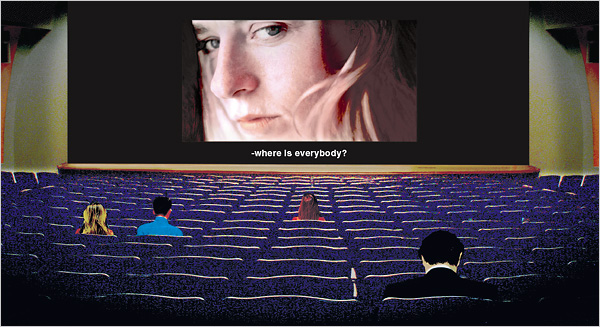
...I wonder how much of this was last year's article, with a few names changed? As the movie awards season commences, so do the speculations on that ever eluding boundary of foreignness. We are reminded annually of our blindness, while the world watches (or so we are told). I can't wait to see if ever a day will come when we are left to our blindness.

Saturday, January 20, 2007

Friday, January 19, 2007

logo a go go


Using Flickr as jurying process, Architecture for Humanity has opened up the selection of its logo to the public. In less than 12 days AFH received 812 entries from more than 60 countries, an incredible response from the design community. Hats off to ALL who entered. During December more than 65 jurors from four continents voted both online (via Flickr commenting) and offline. AFH are now in the process of selecting the winner from the list of finalists. This week AFH made the Flickr sets open to the public to make their own comments - already it has been viewed over 1500 times. So click on the Final Round link and decide on who you think should win!

Saturday, January 13, 2007

Friends, Romans, Countrymen, Lovers, Haters, Murderers, Barbarians ...


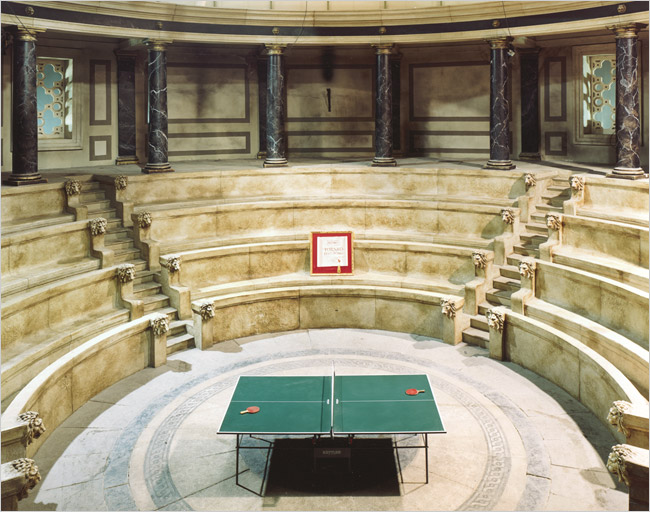
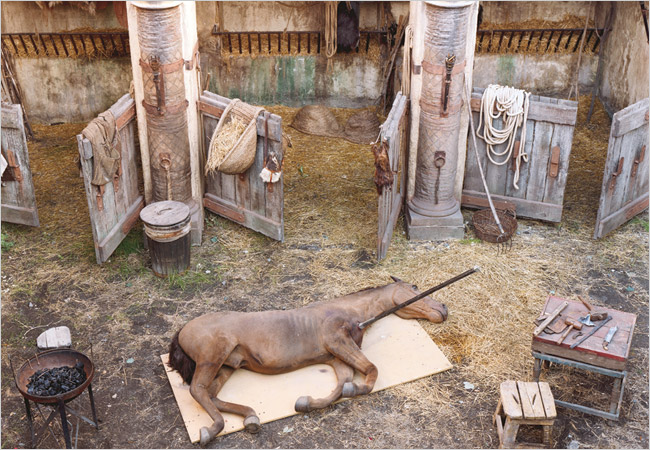
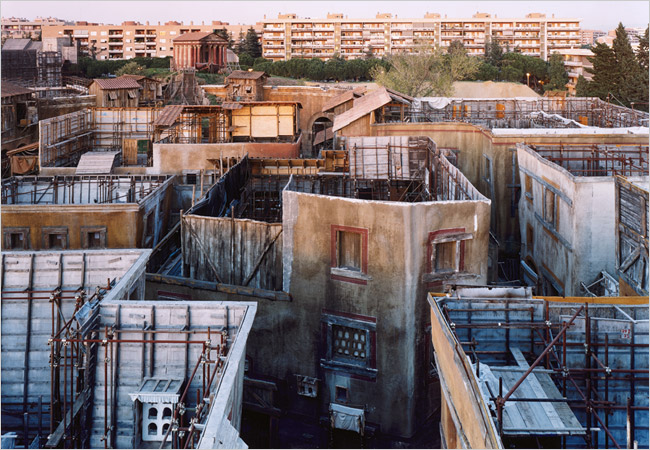
...lend me your eyes. Even though the HBO series never quite rose, and eventually fell with an inconsequential thud, I was happy to read about its revival recently. Indeed, every works of the imagination on Rome reveals more about the epochs that produced them than they do about the vanished civilization they depict - much like all representations, I suppose. This one, I remember as having enthralled me by its , ummm, earnestly accumulated squalor and grit, as if saying: We must say ta-ta to empires now and introduce ourselves to civilizations. I don't know if they quite did that, but that squalor was sure requisitely pretty.

Wednesday, January 10, 2007

sold! to the devil.


to bite, or not to bite - that is the question....
Even for an ardent macFan, this latest gizmo begs the question: at what price did Steve Jobs sell himself to the devil? The signs are everywhere!
(to the left: the LG Chocolate, to the right: the new i-phone. ohhh, the suspense is killing me...will i or won't i be $499 poorer?)

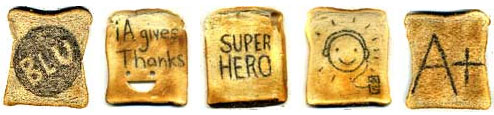
you are toast...

I love the absurdity of this site and the fact that 100% of the proceeds (and they appear to be significant) will go to charity. Not sure where these crazy cats are from, but judging from their use of the word "brilliant", I am guessing the UK. It's too hard to explain, just click through and check it out for yourself. And... buy some toast... www.yournameontoast.com

Wednesday, January 03, 2007

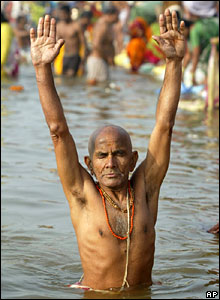
oh, the burden of fun...

Hundreds of thousands of men, women and children then jumped into the water...


Initially I felt some cold, but one dip and the cold was gone.

Friday, December 29, 2006

Tuesday, December 26, 2006

an awwww... moment


two Bengali Economists & Nobel Laureates meet in Dhaka, Bangladesh, on Dec 25.

Left: Dr. Amartya Sen (Economics, 1998)
2nd from right: Dr. Muhammad Yunus (Peace prize, 2006)

Sunday, December 24, 2006

Friday, December 22, 2006

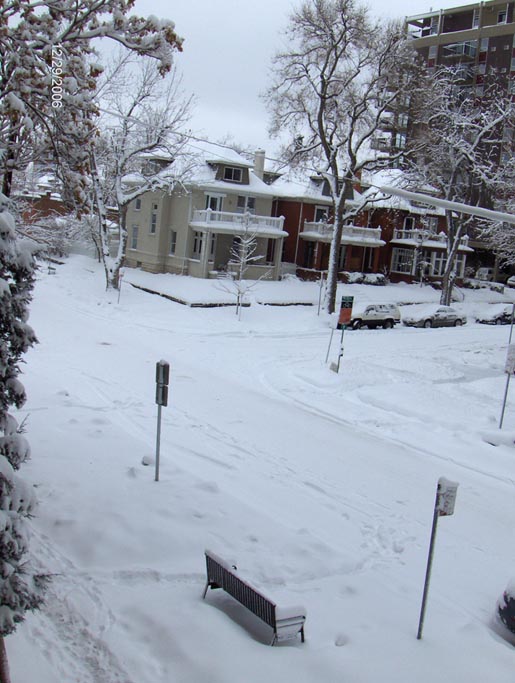
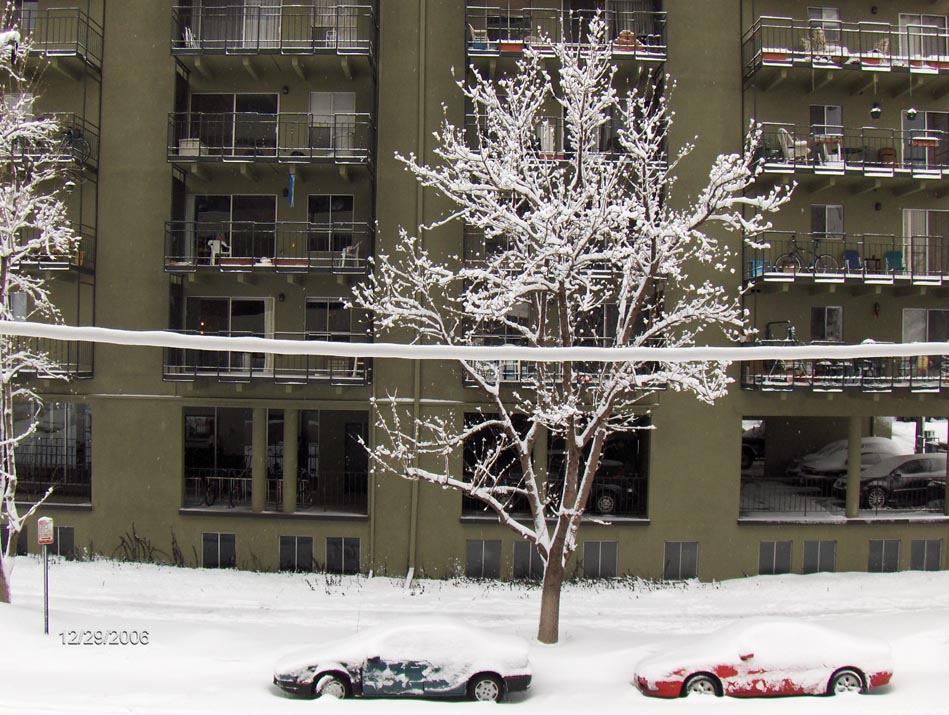
dude, where's my car?!


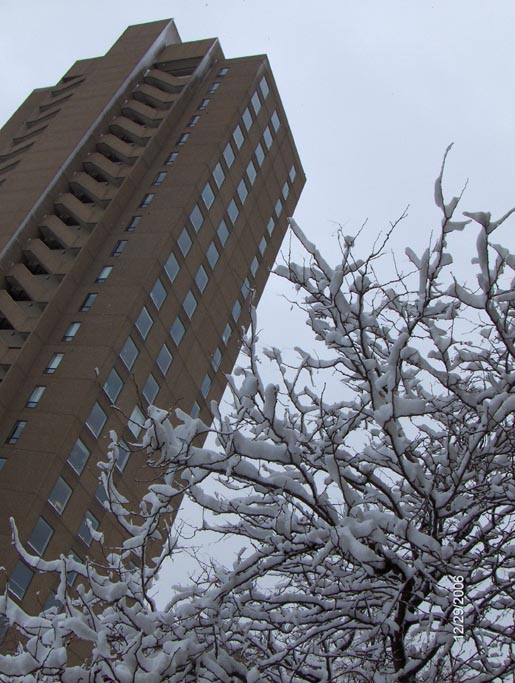
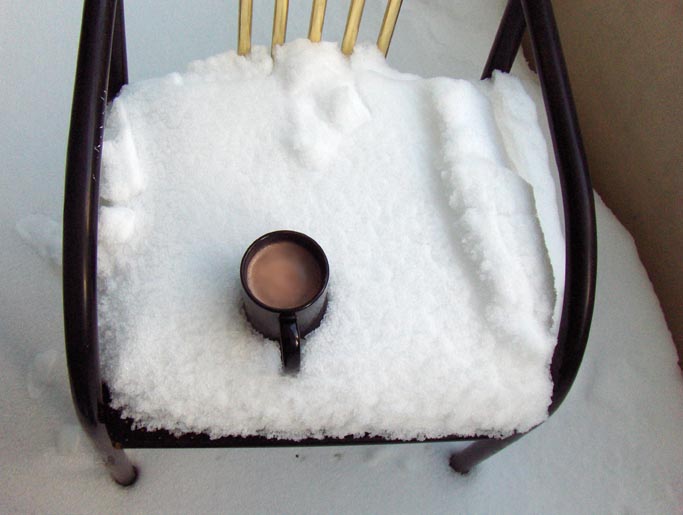
my first blizzard, my first snow shovelling, my first falling squarely on my ass on the snow... and almost cracking my pelvis...
I think I will stay away from ice-creams for quite some time.

Friday, December 08, 2006

some wise words

And when your life is in the toilet and that blue water is swirling around your head, just remember: The sky is also blue, and as we all know, the sky’s the limit.
(It’s important to hope, but vodka does not remove bloodstains from white linen.)

- from A WORD OF ADVICE.

Monday, December 04, 2006

It's dizzying

...the criticism, that is. Check it out:

"Art is made to disturb," Georges Braque, the cubist painter and Pablo Picasso buddy, once said. But art museums?

The new Denver Art Museum addition, it seems, is disturbing some visitors by making them dizzy. Staring up at the soaring walls is - in a few people - causing tiny crystals to tumble around the inner-ear balance center, hitting cells and making the visitors woozy. Add the building's unusual angles and curving stairways, which can confuse the eyes, and the results can be stomach-churning.
"My patients are not going to the art museum," said Carol Foster, an ear specialist and balance expert at the University of Colorado Health Sciences Center. "You could bus a bunch of them over there and they'd be flopping around on the floor," she joked.
Museum officials say the effect is tiny - there has been only one official complaint of dizziness.
"There was never intention on the part of the museum to create a perceptual challenge," said Andrea Fulton, the museum's communications director. Still, with the reports of vertigo, the museum - designed by architect Daniel Libeskind, who could not be reached for comment - joins a list of buildings with high-profile architecture and unintended consequences.
There is the Disney Concert Hall in Los Angeles designed by Frank Gehry, for example. The building, a swirl of shiny metal, caught and reflected so much Southern California sunlight that it raised the temperature on a nearby sidewalk to 140 degrees Fahrenheit.
And the Kennedy Center in Washington, D.C. - designed by Edward Durrell Stone - has a massive awning with no visible supports that triggers anxiety in some people, creating an urge to flee.
"Architecture is a speculative project," University of Colorado architecture professor Taisto Makela said. "Just by drawing things, making models, thinking about things, you can't tell how that space will be experienced until you do experience it."
Only one of the 223 official comments at the Denver Art Museum mentioned dizziness, Fulton said. Others suspect the problem is more widespread. When CU's Makela visited the museum last month with 11 students, three of them said they felt dizzy and uncomfortable.
"I was really quite surprised," Makela said. "I didn't experience it, but these students did." Makela has been a critic of the building not for its ability to induce vertigo, but as a strange and difficult place to display art given its tipped walls and odd spaces. The museum's space is challenging the ears and eyes, which work together to keep people balanced and comfortable on their feet, said CU's Foster. The inner ear's gravity sensors - the saccule and utricle - form a chairlike structure with a "seat" and "back," she said. When you tip your head up, the seat's now vertical and the back is horizontal, Foster said. In the new museum, she said, "not only are the walls interesting overhead, but they bend backwards over you, which is a really, really unusual position." "Ice skaters get used to it, but the average person doesn't practice that position enough to have reflexes for it," Foster said. So we feel dizzy - or fall down, she said.
Many people, especially those who are older, also have small defects in otoconia, a system of crystals in the inner ear that help people orient in space. "They're heavy, and they're stuck together with this sticky glue," Foster said. The glue becomes less sticky with age, letting some crystals float free, and whenever you bang your head against the car door or when crawling under a table - that can fling crystals free, she said. Eyes are also critical for balance, Foster said. Unconsciously, we're continually using objects within 6 feet for visual reference in space.
In the new art museum, walls slant away from the edges of the winding "canyon walk" staircase. Visitors descending the long stairways often clutch the guardrail. "People who are a little more visually dependent for balance ... you're gonna want to hang on to a railing," Foster said.
That was true for Trevor Pyle, one of the CU students who accompanied Makela. Pyle said he experienced slight vertigo when standing at the balconies. "I actually enjoyed the motion caused by the angles," Pyle said. "I thought it added to the experiential aspect of the building. None of the motion sickness made me uncomfortable, but it was present."

Craig Ruff, a Boulder resident, sometimes feels mildly motion sick when a passenger in a car, but the museum was worse.
"There were these sloping walls, bright lights that draw your attention other than where you're supposed to be walking, angles that were worse near the top," he said.
Ruff said he overheard one museum docent advising visitors to "concentrate on a piece of art and not look around too much."
Inside the new museum, paintings hang on angled walls. Explanatory videos play on surfaces that tilt away from the viewer, or on trapezoidal walls, making a projected rectangle appear distorted. "Our approach in general is that not everything has to fall into the normal boundaries of what you might expect. We like that," Fulton said. "We like the conversation it's created."

Denver Post/9News staff writer Ernie Tucker contributed to this report. After which he promptly packed up for the weekend and left for the equally dizzying experience of the Rocky Mountain National Park...most probably. He is currently writing on his experiences, and the experiences of other climbers and outdoors men and women and the article will take a critical view on the effects of mountains and other natural expressions on unsuspecting, ill-prepared humans.